Over 800 business and government leaders will discuss industrial AI and advanced manufacturing as Germany seeks deeper economic ties with Korea
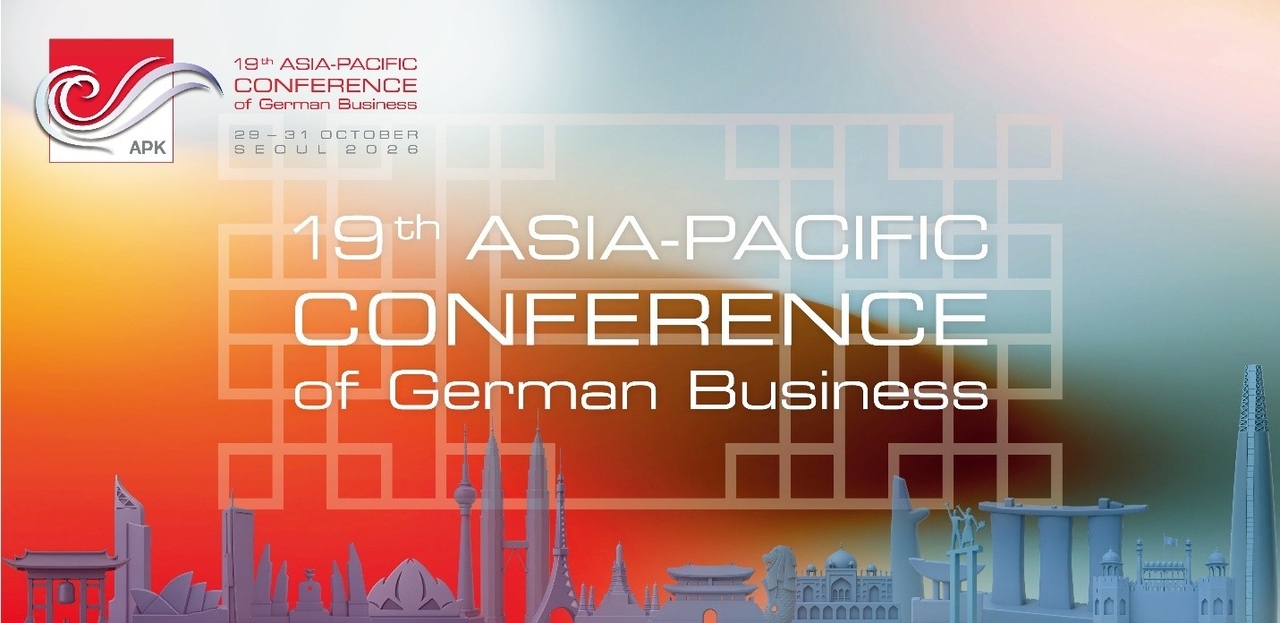
South Korea is set to welcome top executives and policymakers from Germany and across the Asia-Pacific region this week for a high-profile business forum focused on industrial cooperation, artificial intelligence and supply chain resilience amid rising geopolitical and trade uncertainty.
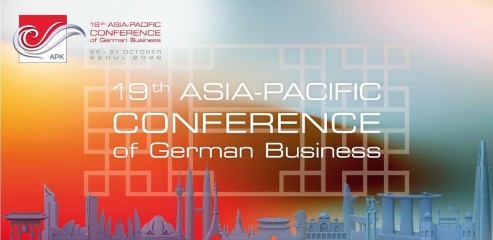
The 19th Asia-Pacific Conference of German Business, or APK 2026, will take place in Seoul from Thursday to Saturday. The event brings together over 800 business executives, policymakers and industry representatives, including German Chancellor Friedrich Merz and top executives from Siemens, Deutsche Bank, BASF and DHL Group, according to the Korean-German Chamber of Commerce and Industry on Wednesday.
The gathering comes as German firms look to diversify global supply chains, strengthen industrial competitiveness and expand partnerships in key technologies, including AI, semiconductors and advanced manufacturing.
Merz and South Korean Prime Minister Han Seong-sook are scheduled to deliver keynote addresses on Friday, highlighting the political weight both governments place on economic cooperation between the two countries and the wider Asia-Pacific region.
The German chancellor is also scheduled to meet President Lee Jae Myung on Thursday; the two leaders are expected to discuss economic cooperation and emerging technologies, including AI, battery and semiconductors.
The conference will be opened by Siemens CEO Roland Busch, co-chair of APK 2026 and chair of Asia-Pacific Committee of German Business, alongside Kirsten Schoder-Steinmuller, vice president of the German Chamber of Commerce and Industry.
Stefan Rouenhoff, parliamentary state secretary at the Federal Ministry of Economic Affairs and Energy, will join South Korea's Industry Minister Kim Jung-kwan in the opening talk on how global power shifts are reshaping Germany’s economic relations with the Indo-Pacific region.
The event will also feature prominent corporate leaders from both countries as speakers, including Deutsche Bank CEO Christian Sewing, BASF CEO Markus Kamieth, DHL Group CEO Tobias Meyer, Boehringer Ingelheim CEO Shashank Deshpande and Naver CEO Choi Soo-yeon.
The conference will open with a welcome reception hosted by Deutsche Bank at The Shilla Seoul on Thursday, followed by two days of discussions at the Grand InterContinental Seoul Parnas.
Industrial AI is expected to be a central theme, as manufacturers turn to the technology to improve productivity and competitiveness. Other topics include supply-chain resilience, critical raw materials and shifting global trade dynamics.
Why South Korea?
The biennial forum's return to Seoul highlights South Korea's growing importance to German businesses, which view the country as both an export market and a strategic partner for manufacturing, technological innovation and regional supply chains. This marks the third time Seoul has hosted the conference, following previous editions in 1992 and 2007.
Germany is South Korea’s largest trading partner within the European Union, accounting for roughly 13 percent of Korea’s trade with the bloc. Approximately 540 German companies operate in Korea, supporting an estimated 100,000 jobs, according to Germany’s Federal Foreign Office.
The two countries have longstanding industrial ties spanning automotive manufacturing, machinery, chemicals, semiconductors and renewable energy.
South Korea’s strength in semiconductors, digital infrastructure and advanced manufacturing complements Germany’s expertise in industrial engineering, automation, and specialized machinery, creating opportunities for deeper cooperation in industrial AI, smart factories and energy technologies.
“APK 2026 comes at an important time for Korea-Germany economic relations. As companies navigate technological change, geopolitical uncertainty and the energy transition, close cooperation between our two countries is becoming increasingly valuable,” said Marie Antonia von Schonburg, president and CEO of the Korean-German Chamber of Commerce and Industry.
“Korea and Germany bring complementary strengths in innovation, industrial expertise and advanced manufacturing,” she said. “By bringing business and government leaders together in Seoul, we hope to create space for meaningful dialogue, strengthen existing partnerships and explore new opportunities for investment and collaboration.”
The chamber, which serves as the conference’s local co-host, said the gathering would provide opportunities to deepen bilateral business ties and explore new investment and technology partnerships.
sahn@heraldcorp.com